 EN
EN

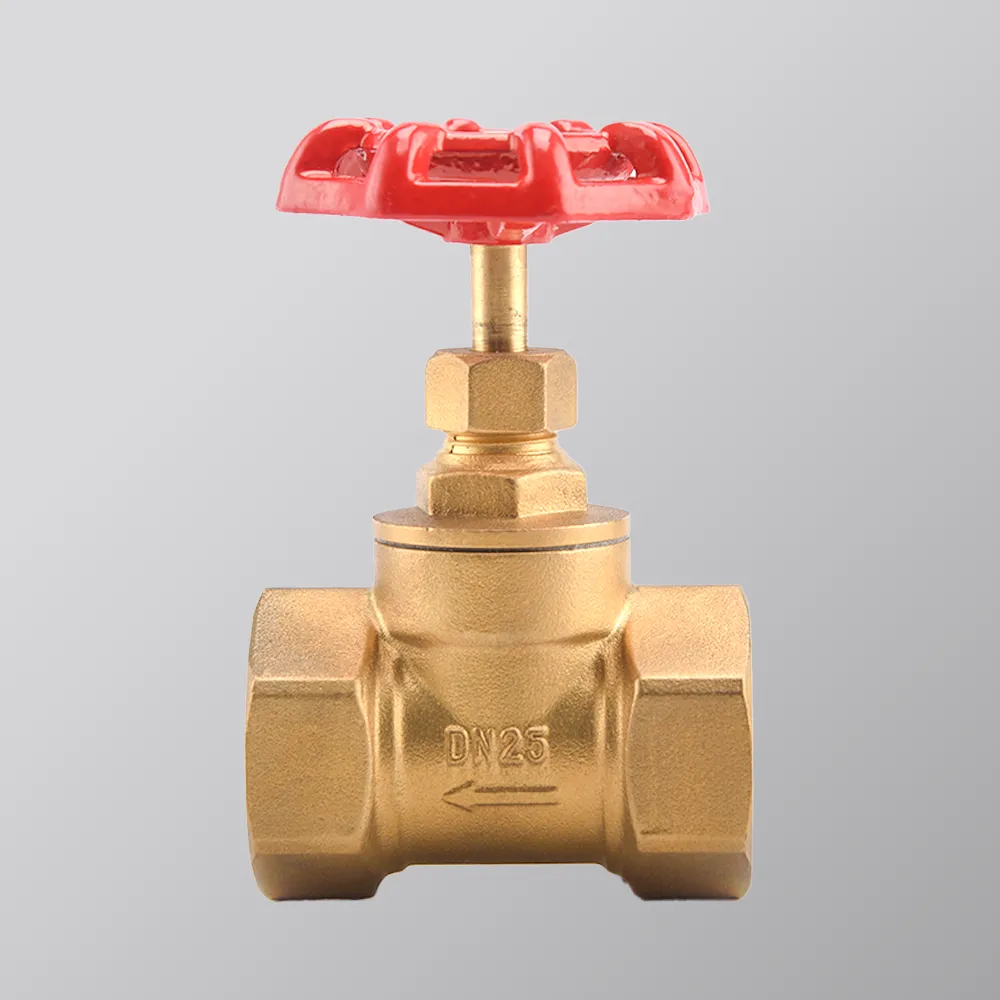
Metallurgical Advantages of Forging: Grain Structure and Density
Grain Flow Alignment Enhances Directional Strength in Brass Forged Ball Valve
Unlike casting—which solidifies molten metal with random, isotropic grain orientation—forging plastically deforms solid brass to align grain flow precisely along the valve’s functional contours. This directional alignment matches the natural stress paths created by internal pressure, delivering targeted strength where it matters most. Crucially, aligned grains impede crack propagation: discontinuities struggle to cross continuous, interlocked grain boundaries. As a result, forged valves withstand repeated pressure cycling and transient surges far more reliably than cast counterparts—directly enhancing long-term pressure-bearing capacity and fatigue life.
Elimination of Porosity and Improved Density in Forged Brass vs. Cast
Casting introduces inherent risks: shrinkage cavities, micro-porosity, and alloy segregation form as molten brass cools unevenly in molds. These hidden defects act as stress concentrators, compromising structural integrity and limiting safe operating pressure. Forging applies intense compressive force while the metal remains solid-phase, collapsing all internal voids and producing a fully dense, homogeneous microstructure—free of weak points. Independent material testing confirms forged brass achieves up to 15% higher average density than equivalent cast alloys. This uniform density translates directly into higher pressure ratings, predictable mechanical behavior, and elimination of premature failure modes rooted in subsurface flaws.
Pressure Performance: Forged vs. Cast Brass Ball Valves
ASME B16.34 Ratings Confirm Superior Pressure-Temperature Capability
ASME B16.34—the authoritative industry standard for valve pressure-temperature ratings—unequivocally validates the performance gap. Forged brass ball valves are rated to 600 PSI at 150°F, outperforming cast brass valves rated to 400 PSI under identical conditions—a 50% advantage. This differential isn’t incremental; it reflects foundational metallurgical superiority: the absence of porosity and aligned grain structure enable sustained load-bearing without localized yielding. Engineers consistently specify forged valves for high-pressure hydraulic systems (where spikes exceed 500 PSI) and steam service above 250°F—conditions where cast brass rapidly loses margin due to thermal softening and defect-driven instability.
Burst Test Evidence: Brass Forged Ball Valve Sustains 3× Rated Pressure
Destructive burst testing reveals the safety reserve engineered into forged construction. While cast brass valves typically fail at ~1.5× their rated pressure, forged brass ball valves consistently sustain three times their rated pressure before rupture—demonstrating a robust 200% safety factor. This resilience arises from seamless molecular continuity: no internal voids, no inclusions, and no weak interfaces to initiate failure. Key benchmarks confirm the distinction:
| Test Parameter | Forged Brass Valve | Cast Brass Valve |
|---|---|---|
| Rated Pressure (PSI) | 600 | 400 |
| Average Burst Pressure | 1800 | 600 |
| Failure Mode | Ductile tear | Brittle fracture |
| Pressure Cycles to Fail | 25,000+ | 8,000 |
Third-party validation (2023) further shows forged valves endure 300% more pressure cycles before leakage onset—attributable to homogeneous material distribution. In water hammer-prone systems—where transient surges can exceed 1000 PSI—this margin is not theoretical; it’s a critical safeguard against catastrophic failure.
Material Science Foundation: C27000 Brass Properties and Pressure Resistance
High-performance forged brass ball valves predominantly use UNS C27000 (cartridge brass), selected for its optimal balance of strength, ductility, and corrosion resistance. When forged, this copper–zinc alloy achieves a minimum tensile strength of 480 MPa (70,000 psi) and yield strength of 170 MPa—nearly double that of typical cast brass alloys used in low-pressure applications (ASM Handbook, Vol. 1, 2022). Crucially, C27000 retains consistent ductility across temperatures from –20°F to 300°F, enabling controlled elastic deformation under extreme load rather than brittle fracture. Its inherent resistance to corrosion from potable water, mild acids, and hydrocarbons also preserves dimensional stability and pressure integrity over decades—preventing the gradual erosion of capacity seen in less stable materials.
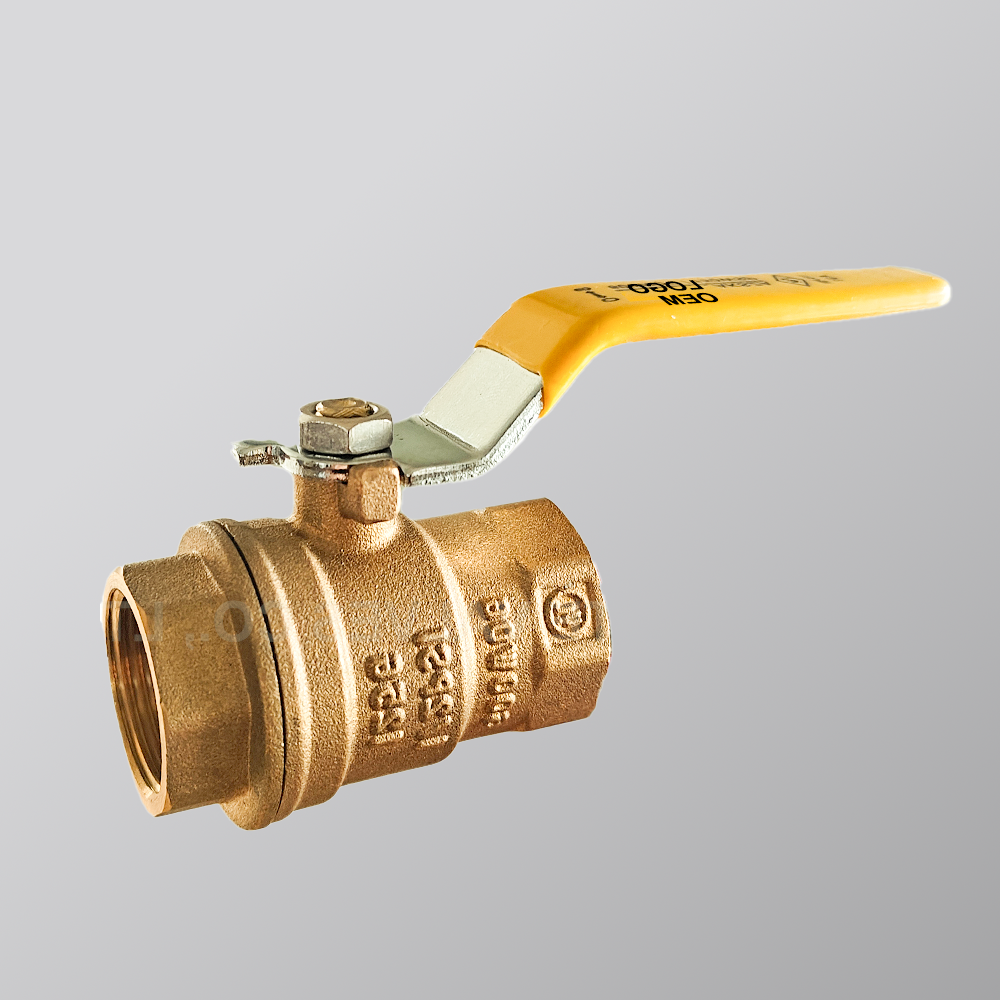
Structural Integrity Synergy: How One-Piece Forged Design Maximizes Pressure Capacity
Elimination of Flanged or Threaded Joints Reduces Leak and Failure Risks
The one-piece forged construction integrates the valve body, ports, and stem bore into a single monolithic unit—eliminating flanged, threaded, or welded joints entirely. This seamless geometry removes conventional failure vectors: gasket extrusion, seal degradation, thread stripping, and weld-zone embrittlement—all of which become critical weaknesses under sustained or cyclic high pressure. With uniform grain flow and density extending uninterrupted through every functional zone, the valve behaves as a single, coherent structural element. The result is demonstrably higher leak-tightness, extended service life, and uncompromised pressure integrity—making one-piece forged brass valves the benchmark for reliability in mission-critical fluid control systems.
Frequently Asked Questions
What is the primary advantage of forging over casting for brass valves?
Forging aligns the grain structure along functional contours, improving directional strength, eliminating porosity, and enhancing density, making forged valves superior in pressure-bearing capacity and fatigue life compared to cast valves.
Why are forged brass valves more resistant to pressure and thermal stress?
Forged brass valves have higher density and homogeneous microstructures. Their directional grain alignment and absence of internal voids or stress concentrators enable them to resist pressure better and maintain structural integrity under extreme thermal conditions.
What are the benefits of one-piece forged valve construction?
One-piece forged valves eliminate flanged, threaded, or welded joints, reducing failure risks such as leaks or seal degradation. This seamless design results in higher reliability, leak-tightness, and extended lifespan.
How do forged brass valves perform in third-party pressure testing?
Forged brass valves sustain up to three times their rated pressure in destructive burst tests and endure 300% more pressure cycles compared to cast valves, highlighting their superior safety and durability.
Table of Contents
- Metallurgical Advantages of Forging: Grain Structure and Density
- Pressure Performance: Forged vs. Cast Brass Ball Valves
- Material Science Foundation: C27000 Brass Properties and Pressure Resistance
- Structural Integrity Synergy: How One-Piece Forged Design Maximizes Pressure Capacity
- Frequently Asked Questions