 EN
EN

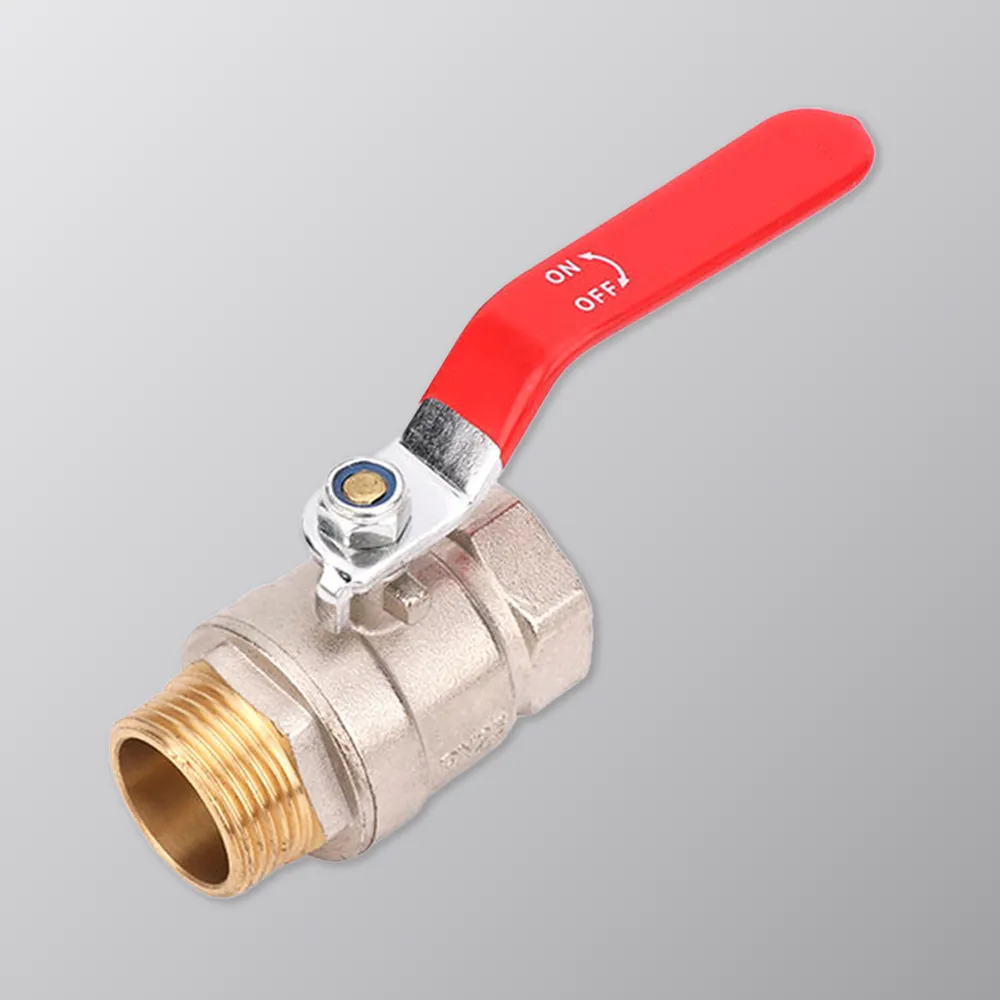
Engineering Superiority: Why the 1/2" Brass Ball Valve Outperforms Legacy Options
Zero-leakage sealing and 90° quarter-turn operation for reliable on/off control
The 1/2" brass ball valve delivers unmatched shutoff reliability through its precision-engineered sealing mechanism. Unlike gate valves requiring multiple rotations, its quarter-turn operation enables immediate flow control with a simple 90-degree handle movement—minimizing wear on PTFE seats and ensuring consistent performance over thousands of cycles. Industry studies show properly installed brass ball valves maintain leak-free operation for over a decade under typical residential pressure conditions. Its full-port design eliminates flow restrictions, reducing pressure drop by approximately 70% compared to traditional globe valves. This combination of speed, reliability, and efficiency makes it the preferred solution for emergency shutoffs and routine maintenance in household plumbing.
Brass construction: corrosion resistance in chlorinated water and NSF/ANSI 61 lead-free compliance
Leading manufacturers use dezincification-resistant brass alloys certified to NSF/ANSI 61 for low-lead content in potable water systems. This material provides inherent resistance to chlorinated water corrosion—the leading failure mode for inferior valves in municipal supplies. Independent testing confirms certified brass alloys exhibit less than 0.1% weight loss after 1,000 hours of exposure to 2 ppm chlorinated water at 60°C. Its metallurgical structure also resists mineral buildup and electrolytic degradation when installed near dissimilar metals. Combined with precision machining, this corrosion resilience allows brass ball valves to withstand freeze-thaw cycles that typically fracture plastic alternatives—contributing directly to their documented service life exceeding 12 years in residential applications.
Installation & Maintenance Efficiency: Speed, Reliability, and Long-Term Cost Savings
Threaded vs. compression 1/2" brass ball valves: balancing DIY-friendliness with leak-proof longevity
Threaded brass ball valves provide robust, permanent sealing via tapered threads that create metal-to-metal compression—ideal for long-term installations where disassembly is rare. Compression fittings feature push-to-connect designs enabling tool-free installation, especially valuable for DIY repairs in confined spaces. Industry data shows compression valves reduce installation time by 65% compared to threaded variants while maintaining equivalent pressure ratings when properly seated.
5.2-year average service life vs. 12+ years for gate valves — driven by reduced seat wear and freeze resilience
Brass ball valves extend service life to 12+ years in residential applications—more than double the 5.2-year average lifespan of gate valves. This durability stems from two key advantages:
- Reduced seat erosion: Full-port geometry minimizes turbulent flow abrasion
- Freeze resilience: Solid brass construction withstands up to 30% greater hydrostatic pressure during freeze-thaw cycles
Plumbing industry studies confirm this longevity translates to 57% lower lifetime maintenance costs versus legacy gate valves—making the 1/2" brass ball valve the economically optimal choice for modern households.
Market Validation: Data-Backed Adoption Across Residential Plumbing Applications
The 1/2" brass ball valve has become the dominant solution in household plumbing, backed by compelling industry metrics. According to the 2024 Plumbing Standards Council, brass valves now comprise over 78% of residential shutoff valve installations—displacing outdated gate and globe valves. Retrofit projects reflect strong homeowner preference: 60% of valve replacements in single-family homes used brass ball valves in 2023. New construction adoption exceeds 90% among leading plumbing suppliers, aligning with modern building codes mandating lead-free (NSF/ANSI 61) materials. Critically, the shift correlates with a 42% reduction in post-installation leak service calls across 12 major U.S. municipalities (2020–2023 Utility Data Consortium), validating their role in preventing water damage.
Future-Proofing Households: How the 1/2" Brass Ball Valve Supports Modern Plumbing Standards
Compatibility with PEX, CPVC, and copper systems — enabling seamless integration in retrofits and new builds
The standardized 1/2" brass ball valve is essential for modernizing residential plumbing due to its universal compatibility with today’s most common piping materials. Its threaded connections integrate seamlessly with PEX tubing, CPVC pipes, and traditional copper systems—eliminating the need for specialized adapters during renovations or new installations. Brass’s non-reactive properties prevent galvanic corrosion when connecting dissimilar metals, a critical advantage over alternative valve materials. For contractors and homeowners alike, this cross-system functionality reduces inventory complexity and installation errors—making the 1/2" brass ball valve the pragmatic, future-ready choice for residential water control.
FAQ
What makes the 1/2" brass ball valve superior to gate valves?
The 1/2" brass ball valve provides improved reliability with zero-leakage sealing, quick quarter-turn operation, and reduced seat wear, allowing it to last over 12 years.
Why is brass used in these valves?
Brass offers superior corrosion resistance, especially in chlorinated water, and complies with NSF/ANSI 61 standards for potable water, making it durable and safe for residential use.
Are brass ball valves compatible with modern plumbing systems?
Yes, brass ball valves are universally compatible with PEX tubing, CPVC pipes, and traditional copper systems, making them ideal for retrofits and new installations.
How do compression fittings compare to threaded fittings?
Compression fittings ensure faster and tool-free installation, reducing installation time by 65% while maintaining robust pressure ratings, whereas threaded fittings offer permanent sealing ideal for long-term use.
Table of Contents
- Engineering Superiority: Why the 1/2" Brass Ball Valve Outperforms Legacy Options
- Installation & Maintenance Efficiency: Speed, Reliability, and Long-Term Cost Savings
- Market Validation: Data-Backed Adoption Across Residential Plumbing Applications
- Future-Proofing Households: How the 1/2" Brass Ball Valve Supports Modern Plumbing Standards
- FAQ