 EN
EN

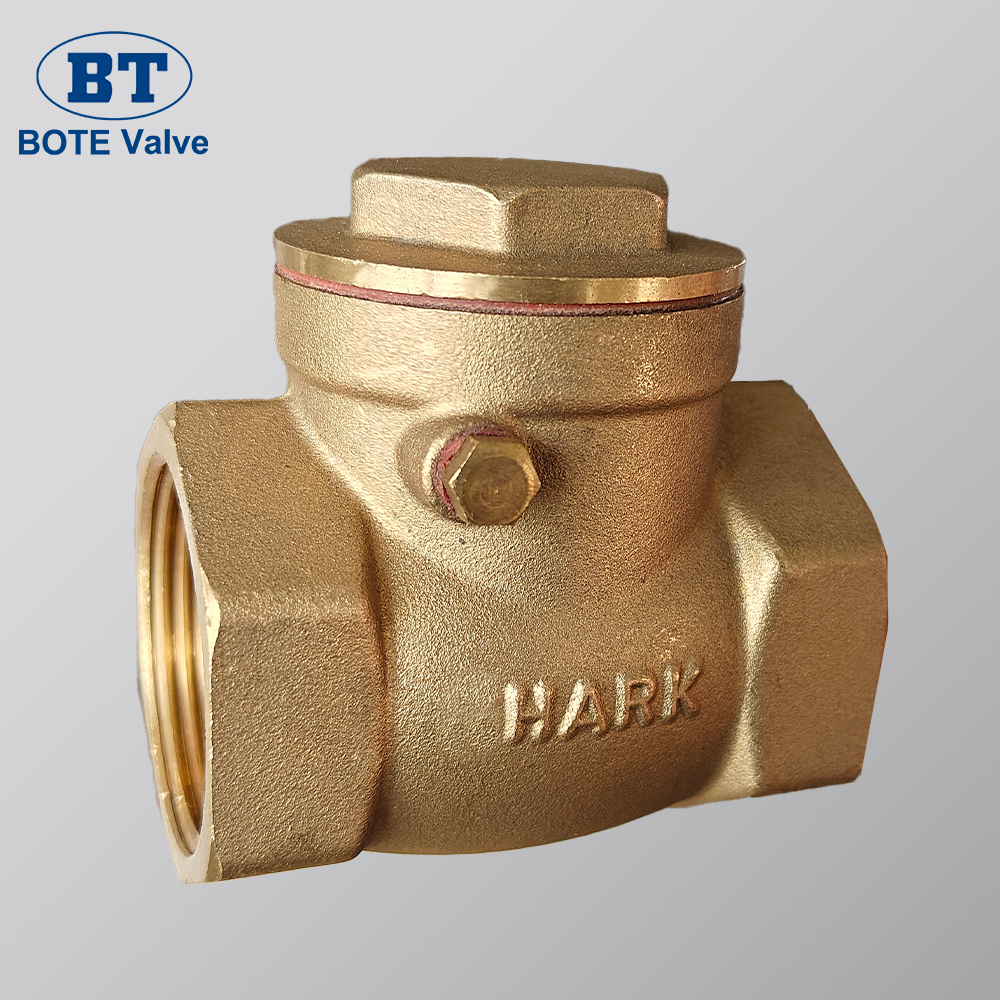
How a Check Valve Prevents Backflow and Maintains Flow Integrity
Core Operating Principle: Cracking Pressure, Unidirectional Flow, and Automatic Closure Mechanics
A check valve acts as an autonomous flow gatekeeper in piping systems. It opens only when upstream pressure exceeds downstream pressure by a minimum threshold—the cracking pressure—allowing fluid to move forward. This differential pressure lifts the disc, ball, or diaphragm off its seat. When flow stops or reverses, gravity or backpressure forces the closure element tightly against the seat, sealing the line instantly. No external control or power is required. This fail-safe, automatic response prevents cross-contamination between potable and non-potable sources—a critical safeguard in applications like irrigation, where a missing valve could siphon fertilizers into drinking water lines.
Critical Design Factors: Seat Integrity, Response Time, and Material Compatibility with Water Quality
Selecting the right check valve hinges on three interdependent criteria:
- Seat Integrity: A leak-tight seal during closure is non-negotiable. Elastomer seats (e.g., EPDM) deliver superior sealing in low-to-moderate pressure systems, outperforming metal-to-metal designs where micro-leakage risks exist.
- Response Time: Closure must occur before reverse flow gains momentum—especially near pumps. Swing-type valves typically close in under 0.5 seconds in vertical orientation; spring-assisted models offer more consistent timing across orientations and flow conditions.
- Material Compatibility: Bronze resists corrosion in chlorinated municipal water but degrades in high-sulfur or acidic environments. For wastewater or aggressive chemically treated systems, PVC or stainless steel (e.g., ASTM A351 CF8M) ensures long-term integrity.
| Design Factor | Failure Risk | Mitigation Strategy |
|---|---|---|
| Weak Seat Seal | Backflow contamination | Specify dual-seal or replaceable elastomer seats |
| Slow Response | Water hammer | Install spring-loaded valves adjacent to pumps |
| Material Incompatibility | Valve erosion or leaching | Match metallurgy and polymer grade to water pH, chlorine residual, and dissolved solids |
NSF/ANSI 61 certification remains the industry benchmark for material safety—ensuring no harmful heavy metals leach into potable water. In HVAC and hydronic systems, response time must be synchronized with pump shutdown sequences to prevent destructive pressure transients.
Check Valve Role in Mitigating Water Hammer and Pressure Surges
Field evidence: correlation between missing/faulty check valves and water hammer incidents (ASSE 1007–2022 data)
Water hammer—caused by abrupt flow cessation—inflicts severe mechanical stress on pipelines and components. ASSE 1007–2022 data identifies absent or degraded check valves in 68% of municipal pipeline damage cases linked to pressure surges. These events generate transient pressures up to 150 psi above normal operating levels, fracturing joints, cracking fittings, and compromising gasket integrity. Properly selected and positioned check valves eliminate the reverse-flow momentum that initiates these shockwaves.
Case insight: preventing surge damage during pump shutdown in hydronic heating systems
In hydronic heating systems, pump failure triggers rapid reverse flow, which—without intervention—generates destructive pressure waves exceeding 740 kPa. A documented field implementation showed that replacing standard swing checks with spring-assisted, non-slam models reduced surge pressure by 92% during emergency shutdowns. Their sub-0.5-second closure blocked backward flow before wave formation, preserving pump impellers, pressure gauges, and expansion tanks. Critically, non-slam designs also prevented recurrent calibration drift in thermal sensors and flow meters caused by repeated hydraulic shock.
Protecting Upstream Equipment and Ensuring System Reliability
A properly installed check valve safeguards critical plumbing components by enforcing unidirectional flow—preventing costly mechanical stress, measurement error, and premature failure across the system.
Preventing reverse-flow damage to pumps, meters, and thermal expansion tanks
Reverse flow subjects equipment to forces outside design parameters. Pumps spun backward suffer impeller erosion and bearing misalignment. Water meters register false consumption during counter-rotation, undermining billing accuracy and conservation efforts. Thermal expansion tanks lose pressure balance, diminishing their capacity to absorb surges and increasing strain on pressure-relief valves. Hydraulic engineering studies attribute 37% of premature equipment replacements in municipal systems to unchecked reverse flow—damage entirely preventable with correctly specified check valves.
Avoiding calibration drift and premature wear caused by unintended backflow
Uncontrolled backflow introduces abnormal hydraulic loading and friction patterns. Flow measurement research shows water meters lose approximately 0.8% accuracy per month without backflow protection. Pump bearings experience up to 300% faster wear during reverse rotation due to improper lubrication dynamics and axial thrust reversal. By ensuring consistent forward flow, check valves preserve meter calibration, reduce mechanical fatigue, and extend service life by 40–60% compared to unprotected installations.
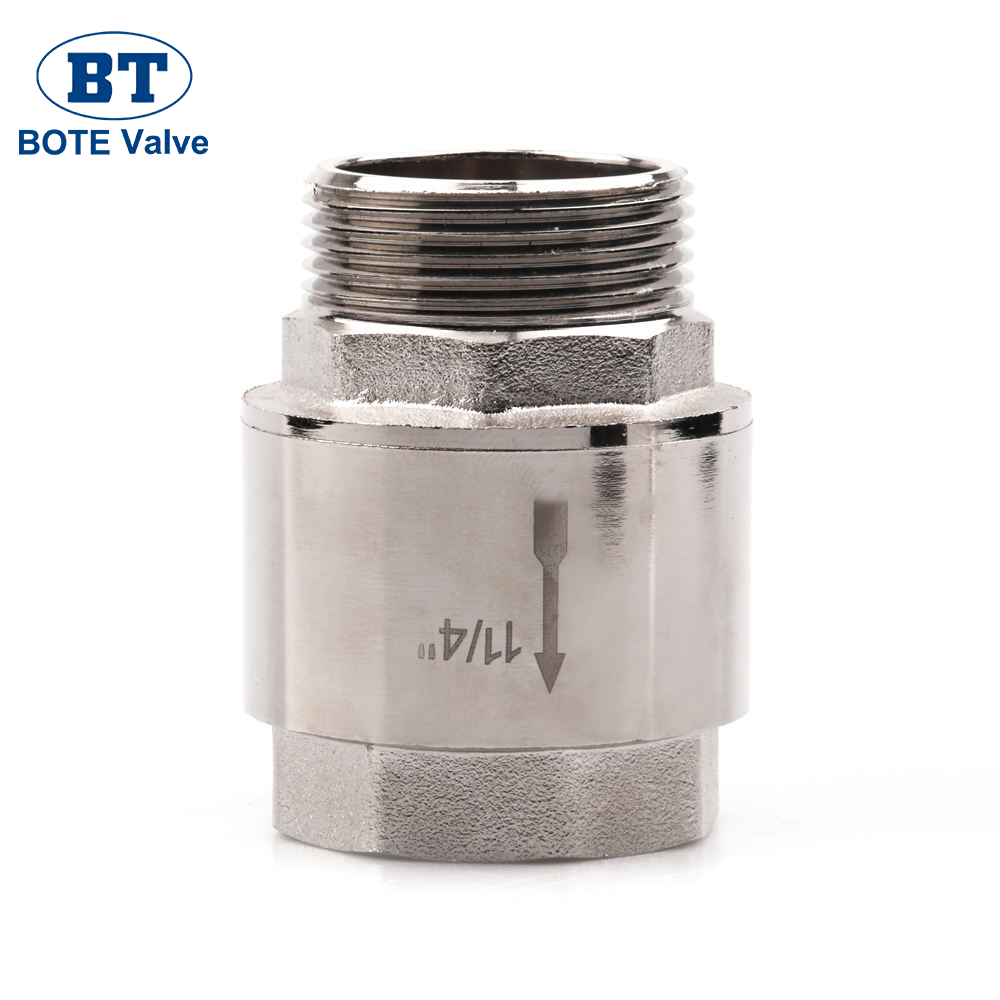
Strategic Check Valve Placement Across Domestic and Hydronic Applications
High-impact locations: booster pump discharge, recirculation loops, solar thermal returns, and cross-connections
Strategic placement targets zones where backflow poses the greatest risk to safety, efficiency, or equipment longevity.
- Booster pump discharge: A check valve here prevents reverse water hammer and motor damage during sudden pump stoppage.
- Recirculation loops: Ensures consistent thermal delivery and blocks cold-water intrusion that disrupts temperature stability and energy efficiency.
- Solar thermal return lines: Stops thermosiphoning when circulation pumps deactivate—preserving system efficiency and preventing overheating in collectors.
- Cross-connections (e.g., irrigation, fire sprinklers, process lines): Mandatory for preventing contamination of potable supplies; often required by local plumbing codes and ASSE 1007–2022.
Field data confirms that installing check valves at these critical junctions reduces maintenance costs by up to 35%, primarily by preventing pump cavitation, thermal stress fractures, and meter recalibration cycles.