 EN
EN

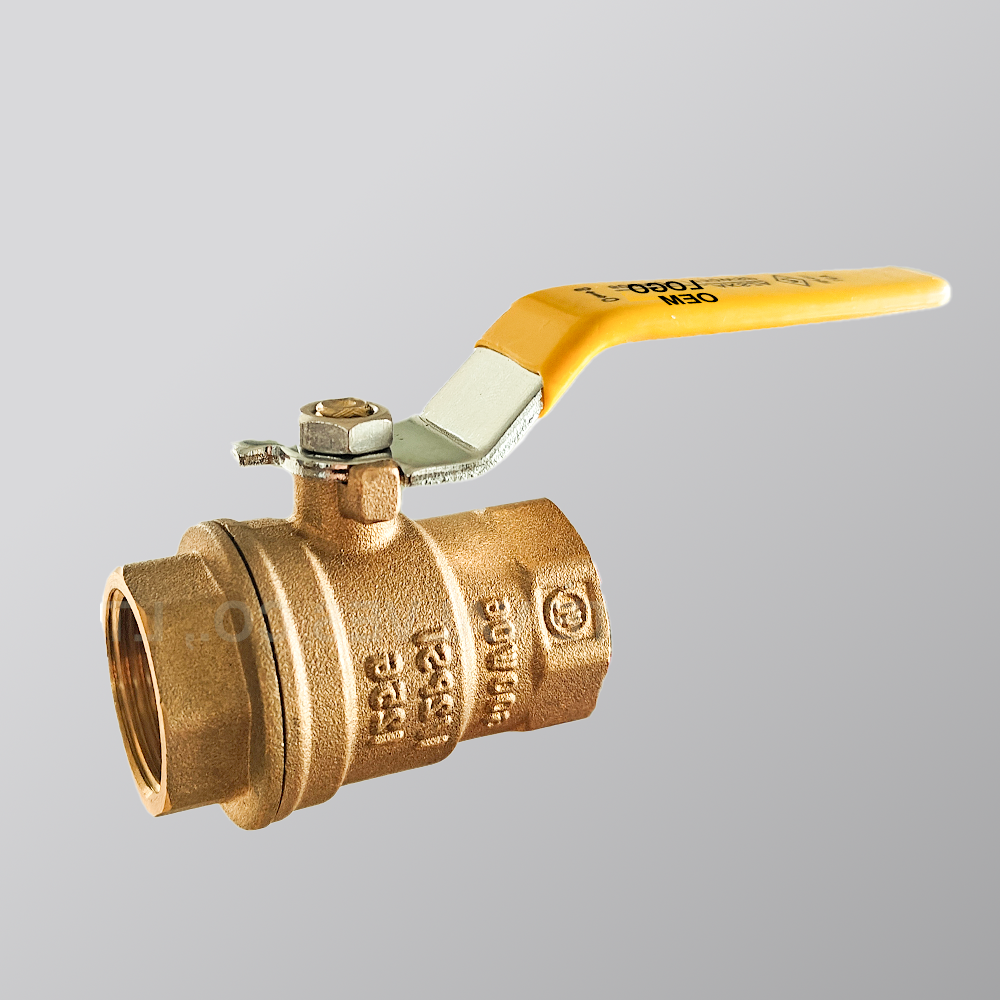
Regulatory Frameworks and Certification Requirements for Residential Gas Valves
IRC/IFGC Fuel Gas Piping Code Compliance for Household Installations
Residential gas piping systems must comply with the International Residential Code (IRC) and the International Fuel Gas Code (IFGC). These codes govern valve selection and installation, requiring an approved shutoff valve at every appliance connection—located within the same room and easily accessible. The valve must be rated for fuel gas, and its connection method must match the piping material: NPT threads for steel pipe or flared fittings for copper.
Per IRC Section G2420 and IFGC Chapter 4, excess flow valves or manual shutoffs must be installed upstream of flexible connectors to limit gas release in case of rupture. A standard 1/2-inch ball valve, for example, must carry the manufacturer’s statement of compliance with applicable pressure and temperature limits. Since the IFGC caps residential operating pressure at 5 psi, a valve labeled “1/2 PSI – 5 PSI” meets this requirement. Code officials also verify that the valve body—whether brass, steel, or certified composite—is compatible with natural gas or propane. Noncompliant installations fail final inspection and are denied gas service.
North American Safety Certifications: CSA, FM, and CGA Marks Explained
Third-party certification is essential for residential gas valves—and widely accepted by code authorities as proof of compliance. The CSA Group’s Z21.21/CSA 6.5 standard governs automatic safety shutoff valves; valves bearing the CSA flame or star symbol have passed rigorous life-cycle, strength, and bubble-tight shutoff testing. Factory Mutual (FM) Global’s Class 7400 approval applies to fire-safe valves, which must maintain an internal drip-tight seal during controlled fire exposure per Class 7440—a critical safeguard in kitchens or utility rooms where fire could compromise unrated components.
The Canadian Gas Association (CGA) formerly issued CGA-3.9-M94, now largely harmonized with CSA requirements; dual CSA/CGA markings may appear on legacy inventory. Each certification validates key performance criteria—including pressure drop, leakage rate (≤ 4 cc/hr air), and endurance under full-rated pressure. Because IRC and IFGC recognize these marks as equivalent to field testing, installers rely on them to confirm compliance without additional verification. A single valve can hold multiple listings—such as CSA for automated shutoff and FM for fire resistance—providing layered assurance aligned with North America’s highest safety benchmarks.
Leakage Performance and Bubble-Tight Shutoff Standards for Gas Valves
ANSI/FCI 70-2 Class VI: The Critical Benchmark for Household Gas Valve Leakage
ANSI/FCI 70-2 Class VI is the strictest leakage classification for soft-seated valves and serves as the definitive pass/fail benchmark for bubble-tight shutoff in residential applications. Unlike metal-seated standards that permit measurable leakage, Class VI requires essentially undetectable flow—measured in bubbles per minute or milliliters per minute—with allowable rates scaling by valve size. For instance, a 1-inch valve must leak no more than 0.15 mL/min, while an 8-inch valve is capped at 6.75 mL/min. In typical residential lines (½–2 inches), this ensures near-zero fugitive emissions—directly mitigating fire and asphyxiation risks. Achieving Class VI demands precision-engineered resilient seats (e.g., PTFE, reinforced PTFE, or elastomers) that conform tightly to the closure member. Lifecycle testing confirms this integrity persists across thousands of operations, making it foundational to long-term household safety.
Validation Testing: Pressure Decay, Helium Mass Spectrometry, and Real-World Relevance
Manufacturers validate Class VI compliance using two primary methods. Pressure decay testing seals the valve with air or nitrogen at rated pressure and monitors for any measurable drop over time—a practical simulation of static residential conditions. For maximum sensitivity, helium mass spectrometry introduces helium upstream and detects trace leakage with resolution down to 1×10⁻⁹ mbar·L/s. This level of detection ensures no hazardous accumulation occurs—even after years of service. Crucially, these tests are not theoretical: they directly correlate to real-world reliability. A valve that passes both tests at 5 psi delivers verified, long-term containment—preventing catastrophic incidents before they begin.
Material Integrity, Pressure Ratings, and Installation-Specific Compliance
ASME B31.8 Adaptation and Material Traceability for Low-Pressure Residential Gas Valves
Though designed for transmission pipelines, ASME B31.8 principles are adapted for residential gas valves operating at ≤5 psi to ensure robust material integrity. This includes full traceability: each valve body casting must be linked to a heat number and certified mill test reports verifying chemical composition and mechanical properties. Installation-specific compliance further dictates pressure class (e.g., Class 125 or Class 150) and material selection—brass or bronze for indoor use, corrosion-resistant alloys or polyethylene-compatible designs for buried applications. Temperature derating and joint compatibility with piping materials are also factored in. Together, these adaptations reinforce structural reliability and prevent failure from substandard or mismatched materials.
Operational Reliability and Long-Term Safety of Residential Gas Valves
Design Lifespan, Manual vs. Automatic Shutoff Capabilities, and Failure Mode Mitigation
Residential gas valve lifespan is determined by material durability, actuation frequency, and environmental conditions. A high-quality quarter-turn ball valve is typically rated for over 10,000 cycles—but real-world longevity depends on proper installation and periodic maintenance. The core safety distinction lies between manual and automatic shutoff capabilities: manual valves require user intervention during leaks or seismic events, while automatic devices—such as Excess Flow Valves (EFVs) or earthquake-actuated models—trigger autonomously when flow exceeds preset thresholds or ground acceleration peaks.
For effective failure mode mitigation, redundancy is essential. A best-practice configuration pairs a seismically rated automatic shutoff valve with a certified manual ball valve upstream. This ensures continued isolation capability even if one component fails—guaranteeing the system defaults to a safe state and preventing uncontrolled gas migration.
FAQ
What is the purpose of IRC and IFGC codes regarding residential gas valves?
The International Residential Code (IRC) and International Fuel Gas Code (IFGC) ensure safe valve selection and installation for residential gas systems. They mandate shutoff valves at appliance connections and limit operating pressure to 5 psi.
What do CSA, FM, and CGA certifications signify for gas valves?
These certifications validate the quality, safety, and compliance of residential gas valves. For example, CSA governs automatic safety shutoff valves, while FM focuses on fire-safe valves, ensuring their reliability under various conditions.
Why is ANSI/FCI 70-2 Class VI important for gas valves?
ANSI/FCI 70-2 Class VI is the strictest standard for leakage in soft-seated valves. It ensures near-zero emissions, mitigating risks such as fire and asphyxiation in residential setups.
What materials are suitable for residential gas valve construction?
Common materials include brass, bronze, and corrosion-resistant alloys. Compatibility with the environment and piping materials, along with traceability, is crucial for safety and compliance.
How can manual and automatic shutoff valves improve safety?
Manual valves require user operation, while automatic shutoff valves, like Excess Flow Valves (EFVs), activate autonomously during leaks or seismic events, reducing the risk of accidents.
Table of Contents
- Regulatory Frameworks and Certification Requirements for Residential Gas Valves
- Leakage Performance and Bubble-Tight Shutoff Standards for Gas Valves
- Material Integrity, Pressure Ratings, and Installation-Specific Compliance
- Operational Reliability and Long-Term Safety of Residential Gas Valves
-
FAQ
- What is the purpose of IRC and IFGC codes regarding residential gas valves?
- What do CSA, FM, and CGA certifications signify for gas valves?
- Why is ANSI/FCI 70-2 Class VI important for gas valves?
- What materials are suitable for residential gas valve construction?
- How can manual and automatic shutoff valves improve safety?