 EN
EN

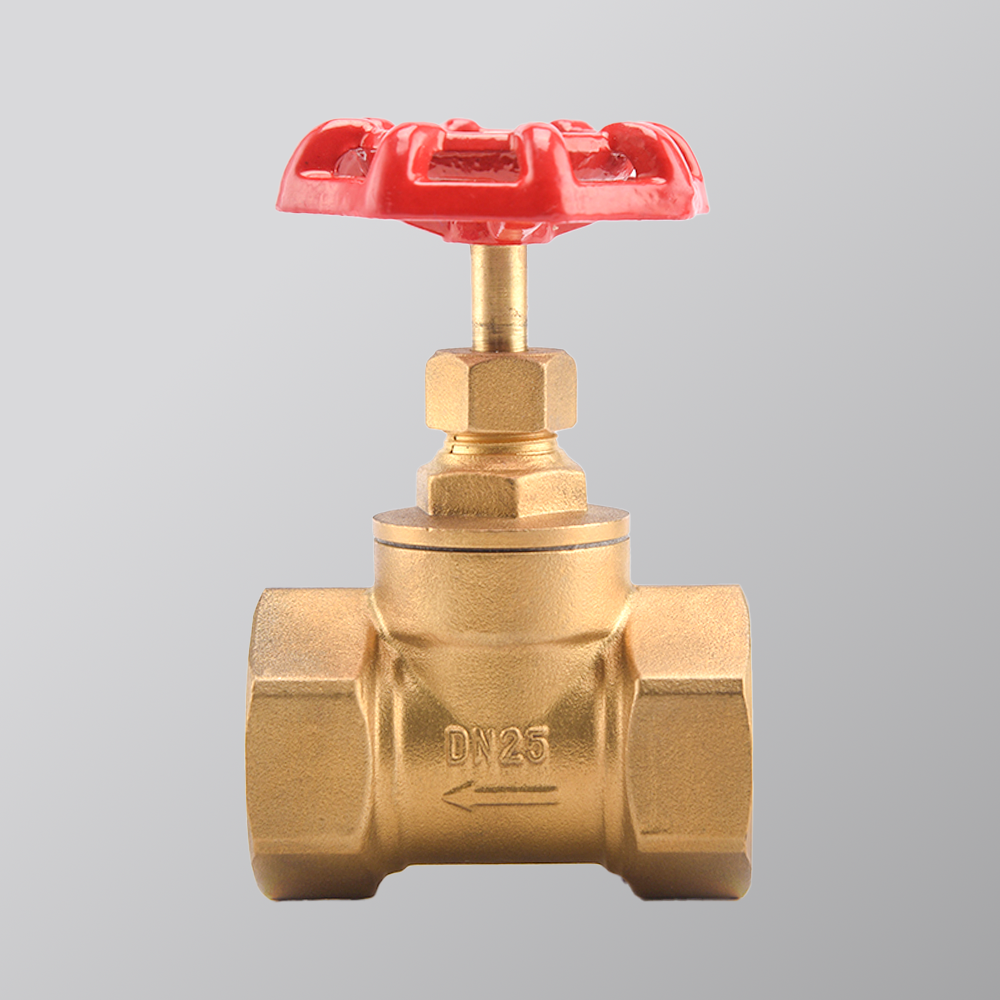
Brass Composition and Alloy Design for Middle East Corrosion Challenges
Copper-Zinc Ratio and Dezincification Risk in High-Chloride Water
The fundamental vulnerability of standard brass valves in Middle Eastern water systems stems from their copper-zinc ratio. Dezincification—a selective leaching process—removes zinc preferentially from the alloy matrix when exposed to aggressive water, leaving behind a porous, mechanically compromised copper structure. This risk intensifies dramatically in high-chloride environments common across the GCC, where desalinated seawater blends and groundwater often exceed 200 mg/L chloride (Gulf Water Institute, 2021). Alloys with zinc content above 15% are inherently susceptible; for example, free-machining Alloy 360 (61.5% Cu, 35.5% Zn, 3% Pb) offers no inherent resistance and fails rapidly in potable or cooling circuits—especially under stagnant or slow-moving warm-water conditions typical in regional building storage tanks.
Field investigations of failed plumbing components in Dubai consistently identify classic visual indicators: white, porous zinc oxide deposits or a pinkish copper hue—clear evidence of dezincification driven by composition, not manufacturing defect.
| Alloy Designation | Nominal Copper (Cu%) | Nominal Zinc (Zn%) | Key Minor Additions | Dezincification Susceptibility in Chloride Service |
|---|---|---|---|---|
| Alloy 360 (Free-Cutting Brass) | 61.5 | 35.5 | 3% Lead (Pb) | Very High — no inherent resistance |
| Alloy 330 (Low-Lead Brass) | 66 | 33.5 | 0.5% Lead (Pb) | High — minimal resistance without inhibitors |
| Alloy 260 (Cartridge Brass) | 70 | 30 | None | Moderate — prone to failure in high-chloride water |
| CZ132 (DZR Brass) | 61–63 | Balance | 0.02–0.06% Arsenic (As) | Low — formulated for dezincification resistance |
Chloride ions act as electrochemical catalysts, accelerating zinc dissolution. Laboratory data shows that a 30% zinc brass may pit and structurally fail within months in Gulf water simulants, while a properly inhibited DZR alloy withstands the same environment for decades. The copper-zinc ratio is thus not just compositional detail—it defines electrochemical stability and long-term service life.
Role of Tin, Arsenic, and Lead in DZR Brass Valve Performance
Minor alloying elements transform vulnerable duplex brass into dezincification-resistant (DZR) material suitable for mission-critical valve applications. Arsenic is the most effective inhibitor, operating at trace levels (0.02–0.15%). It functions by forming a protective layer on beta-phase grain boundaries—the primary sites for zinc leaching—and raises the overpotential for cathodic oxygen reduction, effectively suppressing the electrochemical reaction that drives dezincification. Without arsenic, beta-phase-rich brasses—necessary for hot-forging complex valve bodies—fail rapidly in chlorinated water. ASTM B584 C85700 mandates controlled arsenic levels precisely for this reason.
Lead (1.5–2.5%) serves a mechanical purpose: its soft, discrete particles improve machinability by acting as chip breakers and seal micro-shrinkage porosity in castings—enhancing pressure-tightness in high-rise building systems. Tin (~1%), as found in Naval Brass variants, adds a secondary corrosion barrier through stable, protective oxides—particularly valuable in soft or acidic water. Together, these elements produce synergistic protection: accelerated testing replicating Gulf water chemistry shows arsenical DZR brass enduring over 2000 hours without measurable dezincification depth, whereas an otherwise identical non-DZR alloy penetrates more than 700 µm under the same conditions (Middle East Corrosion Centre, 2023 technical report).
Regional Environmental Stressors Impacting Brass Valve Longevity
Salinity, Chlorine Residuals, and Hardness in GCC Desalinated and Municipal Water Supplies
Brass valve longevity in GCC distribution systems hinges on water chemistry—not just nominal compliance. While reverse osmosis desalinate starts with low TDS (< 50 mg/L), blending with local groundwater elevates chloride concentrations beyond 200 mg/L in several municipal networks (Gulf Water Institute, 2021), a threshold known to accelerate dezincification. Chlorine residuals (0.5–2.0 mg/L), essential for pathogen control, further intensify oxidative attack—especially when combined with ambient temperatures regularly exceeding 40°C. Thermal acceleration is well quantified: each 10°C rise in water temperature approximately doubles the rate of zinc leaching from unprotected brass (Middle East Corrosion Centre, 2020).
Hardness plays a dual role. Moderately hard water (100–200 mg/L as CaCO₃) can form protective carbonate scale, but RO permeate is typically soft and unbuffered—heightening pitting risk, particularly where chloride-to-alkalinity ratios exceed 3:1. Field assessments in Abu Dhabi and Doha confirm early-stage brass valve failures within 12–24 months in unlined seawater cooling loops, versus 5–8 years in hardness-stabilized systems. Material selection must therefore be chemistry-driven—not generic.
Corrosion Mechanisms Specific to Brass Valve Operation in Hot, Humid Climates
Dezincification and Stress Corrosion Cracking Under Elevated Temperature and Humidity
In hot, humid climates, brass valves face two dominant, interrelated threats: dezincification and stress corrosion cracking (SCC). Dezincification proceeds faster under elevated water temperatures—common in summer supply lines—increasing attack rates up to tenfold compared to temperate conditions. High ambient humidity compounds risk by sustaining surface moisture films on exposed valve bodies, especially in coastal or high-humidity zones. This persistent electrolyte layer enables SCC: a brittle fracture mechanism triggered when tensile stress—from assembly torque, thermal expansion, or pressure cycling—interacts with corrosive agents like chlorides, ammonia, or even moist air. SCC susceptibility rises with zinc content and residual fabrication stresses.
Engineers mitigate both mechanisms by specifying DZR brass formulations—particularly those meeting ASTM B584 C85700 with verified arsenic content—and applying post-forging stress-relief heat treatments. These measures ensure structural integrity across the full thermal and hygrometric range typical of Middle Eastern infrastructure.
Practical Alloy Selection Guidance for Brass Valve Deployment Across the Middle East
DZR Brass vs. Standard Brass: Field Evidence from UAE and Saudi Arabian Water Networks (2019–2023)
Real-world performance confirms a stark divergence between standard and DZR brass valves. In Abu Dhabi’s municipal network, standard brass valves exhibited severe dezincification and leakage within 18–24 months. A utility-led study (2019–2023) recorded a 12% failure rate for standard brass exposed to treated desalinated water—dropping to under 2% after transitioning to DZR alloys. Failures were traced to chloride-induced zinc leaching from the beta phase, confirming that composition—not installation practice—was the root cause.
Conversely, a major Saudi Arabian water authority reported zero measurable loss of mechanical integrity in DZR brass valves installed in Riyadh’s hot water loops over a four-year inspection cycle. This resilience stems from optimized heat treatment that stabilizes the alpha phase and suppresses electrochemical zinc dissolution—even in aggressive water chemistries.
ASTM B584 C85700 Suitability Review for Coastal and Desalination-Adjacent Infrastructure
ASTM B584 C85700—a leaded yellow brass with ~63% Cu and 1% Sn—is sometimes considered for valve bodies, but its performance deteriorates sharply in maritime and desalination-adjacent settings. While moderately effective in cold freshwater, it lacks sufficient stabilization against chloride-driven attack in high-humidity, high-temperature coastal environments. A 2021 failure analysis at a Qatari coastal desalination plant documented through-wall pitting and dezincification in C85700 valves on seawater cooling intakes after just 14 months—triggering emergency shutdown and replacement. Degradation was accelerated by ambient temperatures above 40°C and continuous salt-laden humidity, which destabilized the alloy’s alpha phase.
Salt aerosol exposure poses similar risks within 5 km of coastlines. For such applications, true DZR brass—or high-performance duplex alloys engineered for ionic aggression—is the only technically defensible choice.
FAQ Section
What is dezincification?
Dezincification is a selective corrosion process where zinc is leached out from brass alloys exposed to aggressive environments, leaving behind a porous copper structure.
Why is brass prone to dezincification in the Middle East?
High salinity levels, elevated water temperatures, and chloride concentrations in the region’s water systems accelerate dezincification in standard brass alloys.
What is DZR brass?
DZR (Dezincification Resistant) brass is specially formulated with additional elements like arsenic to enhance corrosion resistance and prevent zinc leaching.
How does water chemistry impact brass valve longevity?
Factors such as salinity, chlorine residuals, and water hardness affect brass valve durability. In soft, chloride-rich water, unprotected brass tends to fail more quickly.
What role do minor alloy elements play in DZR brass?
Minor elements like arsenic inhibit dezincification, tin provides secondary corrosion resistance, and lead improves machinability and pressure-tightness.
Table of Contents
- Brass Composition and Alloy Design for Middle East Corrosion Challenges
- Regional Environmental Stressors Impacting Brass Valve Longevity
- Corrosion Mechanisms Specific to Brass Valve Operation in Hot, Humid Climates
- Practical Alloy Selection Guidance for Brass Valve Deployment Across the Middle East
- FAQ Section