 EN
EN

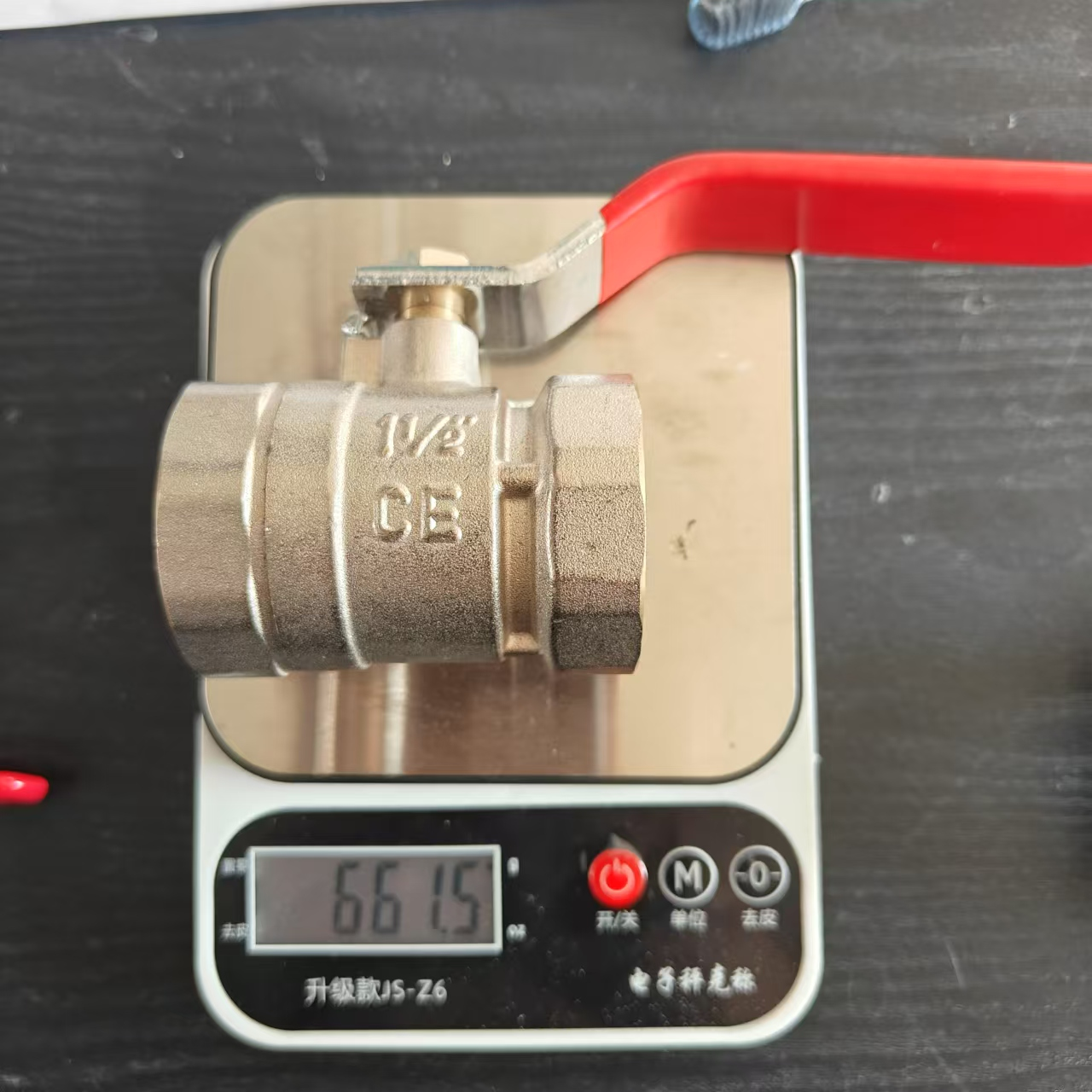
Mandatory International Performance Testing Standards for Brass Ball Valve Export
Before a brass ball valve can be exported, it must pass rigorous international performance tests that confirm leakage resistance and structural integrity. These tests fall under widely recognized standards—API, ISO, EN, GB/T, NSF, UL, CSA, and ANSI—ensuring the valve meets the safety, reliability, and regulatory demands of global markets.
API 598 and ISO 5208: Leakage & Sealing Performance Benchmarks for Brass Ball Valve
API 598 remains a cornerstone for valve inspection and testing, with a strong focus on seat leakage and shell strength. For brass ball valves, this evaluation confirms both pressure boundary integrity and effective sealing at the seat interface. The standard requires testing at pressures up to 1.1 times the valve’s rated capacity; for resilient-seated variants, it mandates zero visible leakage throughout the holding period. ISO 5208 complements this with a classification system for metallic valve tightness—Class A (zero leakage) to Class D—enabling application-specific assurance. Exporters commonly specify Class A or B for high-purity or hazardous media, where even trace leakage compromises safety or process integrity. Because brass alloys like C84400 can exhibit slight porosity, test sensitivity is critical: a single drop during an ISO 5208 Class A check triggers rejection and rework. Third-party witnessing by accredited inspectors—often required for EU, Middle Eastern, and North American tenders—adds independent validation and strengthens buyer confidence in operational reliability.
EN 12266-1 vs. GB/T 13927: Pressure-Temperature Rating Validation for Brass Ball Valve
EN 12266‑1 and GB/T 13927 are the primary standards for verifying a brass ball valve’s pressure–temperature envelope. EN 12266‑1 defines shell and seat tightness tests aligned with the valve’s pressure-class rating at specified temperatures, confirming that the body, stem packing, and internal geometry withstand maximum allowable working pressure without distortion or leakage. GB/T 13927, widely adopted across Asia and increasingly referenced in ASEAN procurement, prescribes longer test durations—particularly for seat closure—to enhance detection of micro-leakage through brass’s inherent microstructure. Both standards incorporate temperature-dependent derating curves, essential for brass alloys whose mechanical strength declines above 120°C. Exporters select the appropriate standard based on destination-market requirements: EN 12266‑1 is mandatory for CE-marked valves entering the EU, while GB/T 13927 is typically required for Chinese and Vietnamese government tenders. Test media may be hydrostatic or pneumatic, with method choice influencing defect detectability—especially for casting-related micro-shrinkage. A brass ball valve validated under either standard demonstrates safe, physically verified performance across applications ranging from cold-water distribution to moderate-temperature process lines.
Functional Integrity Testing: Hydrostatic, Pneumatic, and Seat Closure Validation for Brass Ball Valve
Shell and Seat Closure Tests: ISO 5208 Class A–D Criteria Applied to Brass Ball Valve
Certification for export requires independent validation of both shell integrity and seat closure performance. Per ISO 5208, the shell test subjects the valve body—excluding sensitive internal components—to hydrostatic pressure at ≥1.5× its rated working pressure, revealing casting flaws or structural weaknesses. A separate seat closure test follows, with the ball fully closed and pressure applied upstream. Leakage past the seat is measured and classified from Class A (zero visible leakage) to Class D (quantified, low-level leakage). Class A is non-negotiable for hazardous service, pharmaceutical water systems, or vacuum applications; Class D may suffice for non-critical industrial water lines. Because brass’s duplex α/β-phase microstructure can harbor intergranular micro-shrinkage, achieving Class A often demands precision machining, surface polishing, and rigorous post-casting NDT—making the classification not just a pass/fail metric, but a direct indicator of manufacturing control.
Hydrostatic vs. Pneumatic Testing: Method Selection and Brass Microstructure Impact on Burst Resistance
The choice between hydrostatic and pneumatic testing balances safety, sensitivity, and technical relevance. Hydrostatic testing—using incompressible water—is the industry standard for shell integrity verification due to its inherently lower stored energy and superior safety profile at high pressures. Pneumatic testing—with compressed air or nitrogen—excels in detecting fine leaks, particularly those arising from brass micro-porosity or surface imperfections, because gas molecules penetrate microscopic pathways that liquid cannot. This makes pneumatic testing indispensable for validating seat tightness in Class A or B applications, especially where thermal cycling or long-term sealing stability is mission-critical. However, its higher risk demands remote operation, pressure ramping protocols, and physical barriers per OSHA and ISO 5208 Annex B guidelines. The table below summarizes key distinctions:
| Parameter | Hydrostatic Test | Pneumatic Test |
|---|---|---|
| Primary Focus | Structural Strength & Integrity | Sealing Precision & Leakage Rate |
| Test Medium | Liquid (e.g., water) – Incompressible | Gas (e.g., air, nitrogen) – Compressible |
| Safety Profile | High, due to lower stored energy | Lower, requires remote barriers for safety |
| Leak Sensitivity | Low for microscopic defects | Extremely High for micro-porosity |
For brass ball valves, pneumatic testing is rarely used for shell validation—but when applied to seat closure, it provides unmatched diagnostic insight into real-world sealing behavior under differential pressure.
Market-Specific Sanitation, Safety, and Certification Requirements for Brass Ball Valve
NSF/ANSI 61 & UPC/CUPC Compliance: Potable Water Safety Testing for Brass Ball Valve
Brass ball valves intended for potable water systems must comply with NSF/ANSI 61—the definitive U.S. health-based standard limiting extractable contaminants. Independent laboratories subject the entire wetted assembly—including brass body, seats, seals, and trim—to aggressive extraction fluids simulating worst-case water chemistries. Analytical results verify leached metals (e.g., lead, cadmium, arsenic) and organics remain below toxicological thresholds. Concurrently, UPC (Uniform Plumbing Code) and CUPC listings require hydrostatic pressure testing and compliance with NSF/ANSI 372 for low-lead content (≤0.25% weighted average). Manufacturers demonstrate conformity through IAPMO-recognized labs; the resulting UPC or CUPC mark is legally required for installation in U.S. residential, commercial, and municipal plumbing systems. Together, these certifications eliminate regulatory friction and signal end-user trust—especially critical in jurisdictions enforcing strict lead-free mandates like California AB 1953 and Vermont S.152.
UL, CSA, and ANSI Z21.15 Pathways: Torque and Thermal Cycling Validation for North America
For gas or dual-fuel applications, brass ball valves must satisfy UL 258 (for gas shutoff devices), CSA 6.22 (gas appliance connectors), and ANSI Z21.15 (manual gas valves). UL 258 mandates burst strength, endurance (≥500 open/close cycles), and extreme temperature exposure (−40°C to +70°C). ANSI Z21.15 adds thermal cycling: valves undergo ≥100 cycles between −29°C and +65°C while maintaining gas-tightness—simulating seasonal extremes or rapid HVAC startup. Torque testing ensures operating force stays within defined limits after cycling, preventing field binding or operator injury. CSA certification extends equivalency to Canadian markets, often bundled with cULus listing for dual-country acceptance. Given brass’s coefficient of thermal expansion (≈19 µm/m·°C), these protocols validate that repeated expansion–contraction does not degrade seal compression, distort the ball–seat interface, or compromise stem integrity. Successful certification delivers legal liability protection for importers and distributors—and signals engineering maturity to specifiers managing critical infrastructure.
Frequently Asked Questions
What is the importance of ISO 5208 Class A testing for brass ball valves?
ISO 5208 Class A testing ensures zero visible leakage—crucial for applications involving hazardous media, pharmaceutical water systems, or vacuum setups. It provides assurance regarding manufacturing precision and material quality.
How do hydrostatic and pneumatic testing differ for brass ball valves?
Hydrostatic testing focuses on structural integrity using incompressible liquids, while pneumatic testing detects microscopic leaks using compressible gases, offering higher sensitivity for sealing precision.
Are NSF/ANSI 61 certifications mandatory for export to the U.S.?
Yes, brass ball valves intended for potable water applications in the U.S. must comply with NSF/ANSI 61 and associated standards like NSF/ANSI 372 for low-lead content and UPC/CUPC certification for plumbing compliance.
What safety measures are involved in pneumatic testing?
Pneumatic testing requires stringent safety protocols, including remote operation, pressure ramping, and physical barriers to mitigate risks due to stored energy in compressible gases.
Why should exporters prioritize EN 12266‑1 or GB/T 13927 standards?
EN 12266‑1 is necessary for CE-marked valves entering the EU, while GB/T 13927 is commonly required for Asian tenders. These standards validate performance within designated pressure-temperature ranges.
Table of Contents
- Mandatory International Performance Testing Standards for Brass Ball Valve Export
- Functional Integrity Testing: Hydrostatic, Pneumatic, and Seat Closure Validation for Brass Ball Valve
- Market-Specific Sanitation, Safety, and Certification Requirements for Brass Ball Valve
-
Frequently Asked Questions
- What is the importance of ISO 5208 Class A testing for brass ball valves?
- How do hydrostatic and pneumatic testing differ for brass ball valves?
- Are NSF/ANSI 61 certifications mandatory for export to the U.S.?
- What safety measures are involved in pneumatic testing?
- Why should exporters prioritize EN 12266‑1 or GB/T 13927 standards?